Prehospital Intelligence™
Enabling quality improvement, continuing education, and hospital coordination
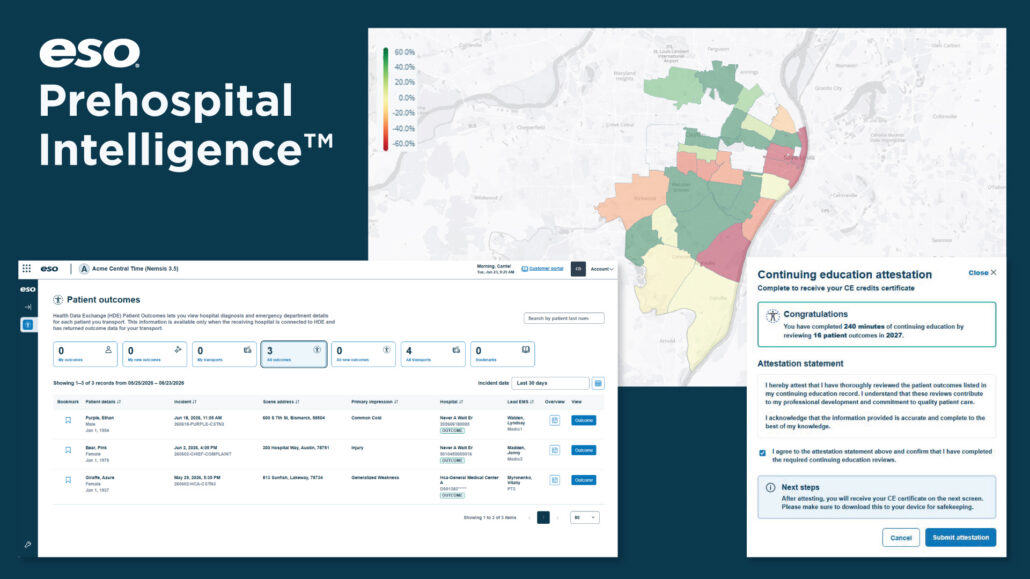
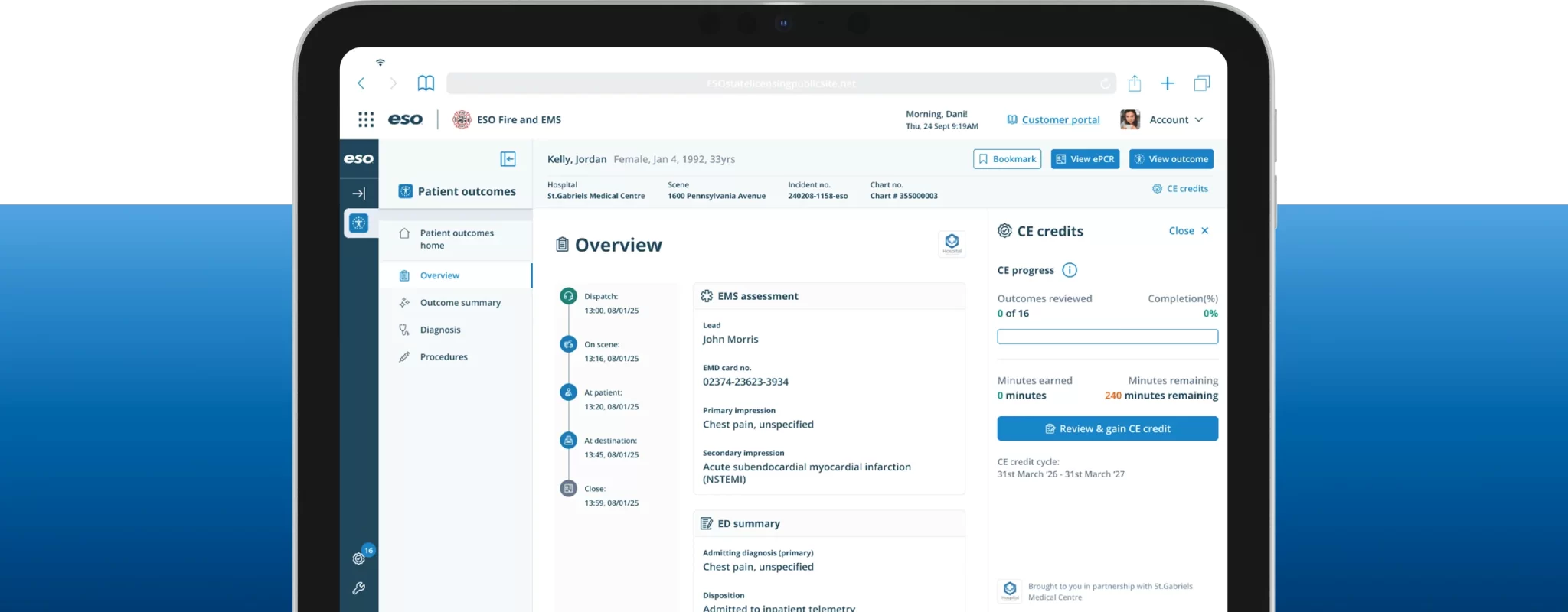
ESO Prehospital Intelligence™ not only provides robust outcome information, but also gives EMS providers real-time outcome feedback and continuing education credit tied to the patients they transported.
Close the Data Loop in Real-Time
For EMS agencies, a critical piece of excellence in patient care is having visibility into the outcomes of the patients you treated. ESO Prehospital IntelligenceTM helps to close the data loop, giving crews real-time visibility into patient outcomes and the feedback needed to continuously improve care.
With Prehospital IntelligenceTM, accessing outcomes also earns continuing education (CE) credit, turning every patient encounter into a learning opportunity. This shared insight builds stronger EMS-hospital partnerships and collaboration toward better outcomes for patients and communities.
Prehospital Intelligence™
Features and Benefits
Real-time Outcome Feedback
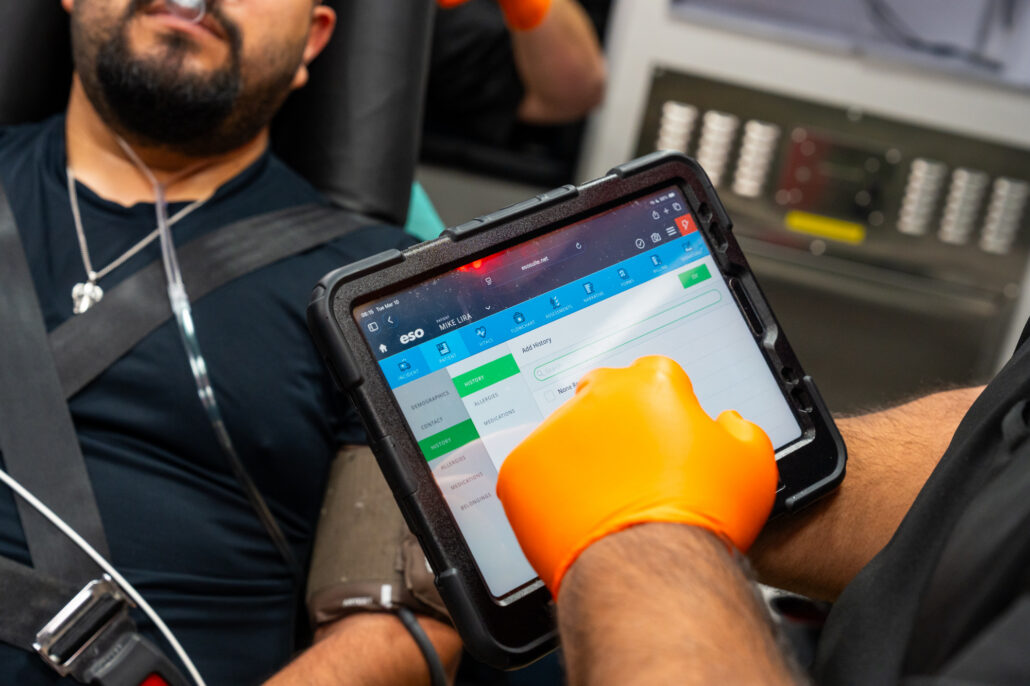
EMS crews make critical decisions under pressure, and are rarely able to find out what happened next. Real-time outcome feedback closes that loop, giving crews and agency leaders timely visibility into patient outcomes, the ability to connect their care decisions to results, and the foundation for meaningful quality improvement conversations with hospital partners.
Earn Continuing Education Credit
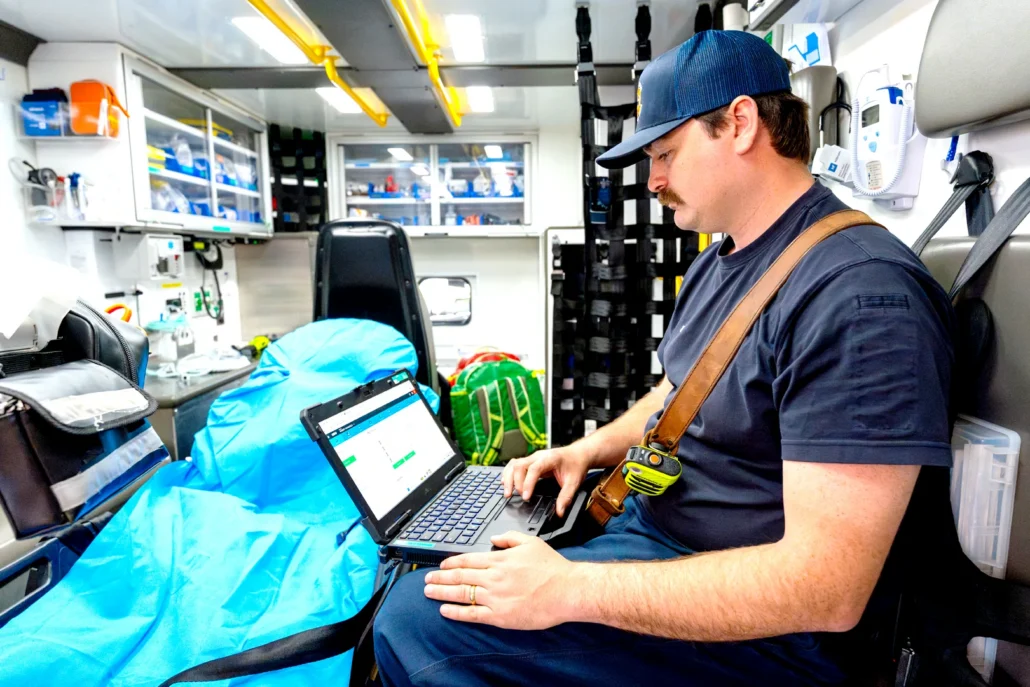
Continuing education requirements are an ongoing need for EMS professionals. ESO Prehospital IntelligenceTM connects continuing education directly to the patients transported, so time EMS professionals spend on CE is also time spent reviewing real outcomes, reinforcing what worked, and identifying where protocols can improve.

Review Outcome Summaries When Time is Short
When EMS professionals only have a few moments between calls, they can access outcomes summaries to gain a quick view of what happened to patients after hand off, and the impact of their care. Later, when time allows, teams can thoroughly review full patient outcome details while earning CE credits.
Enabling EMS-Hospital Collaboration
-
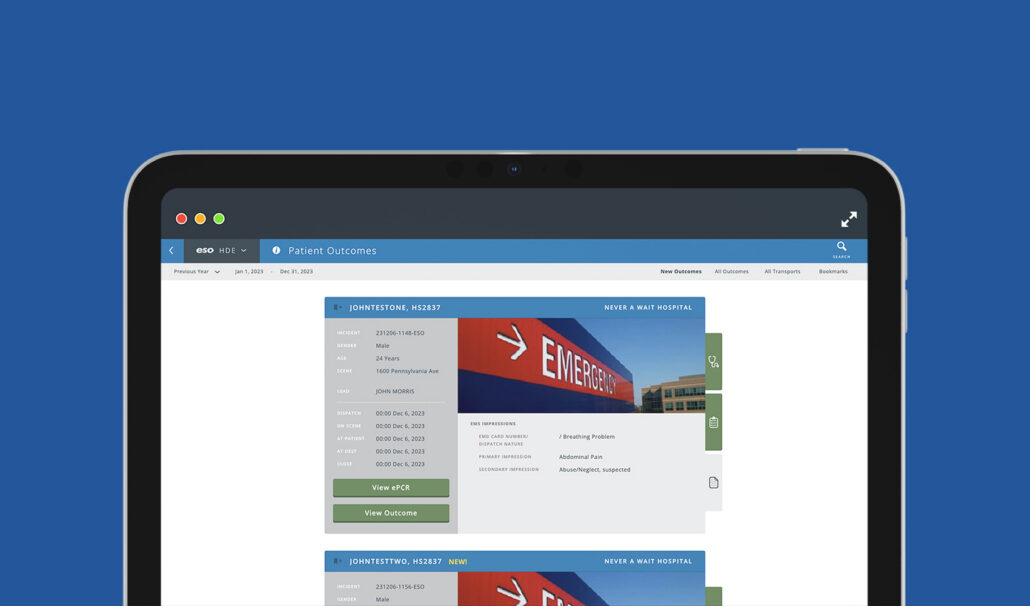
Health Data Exchange (HDE)
Real-time interoperability
-
EHR
Mobile-first documentation in the field